
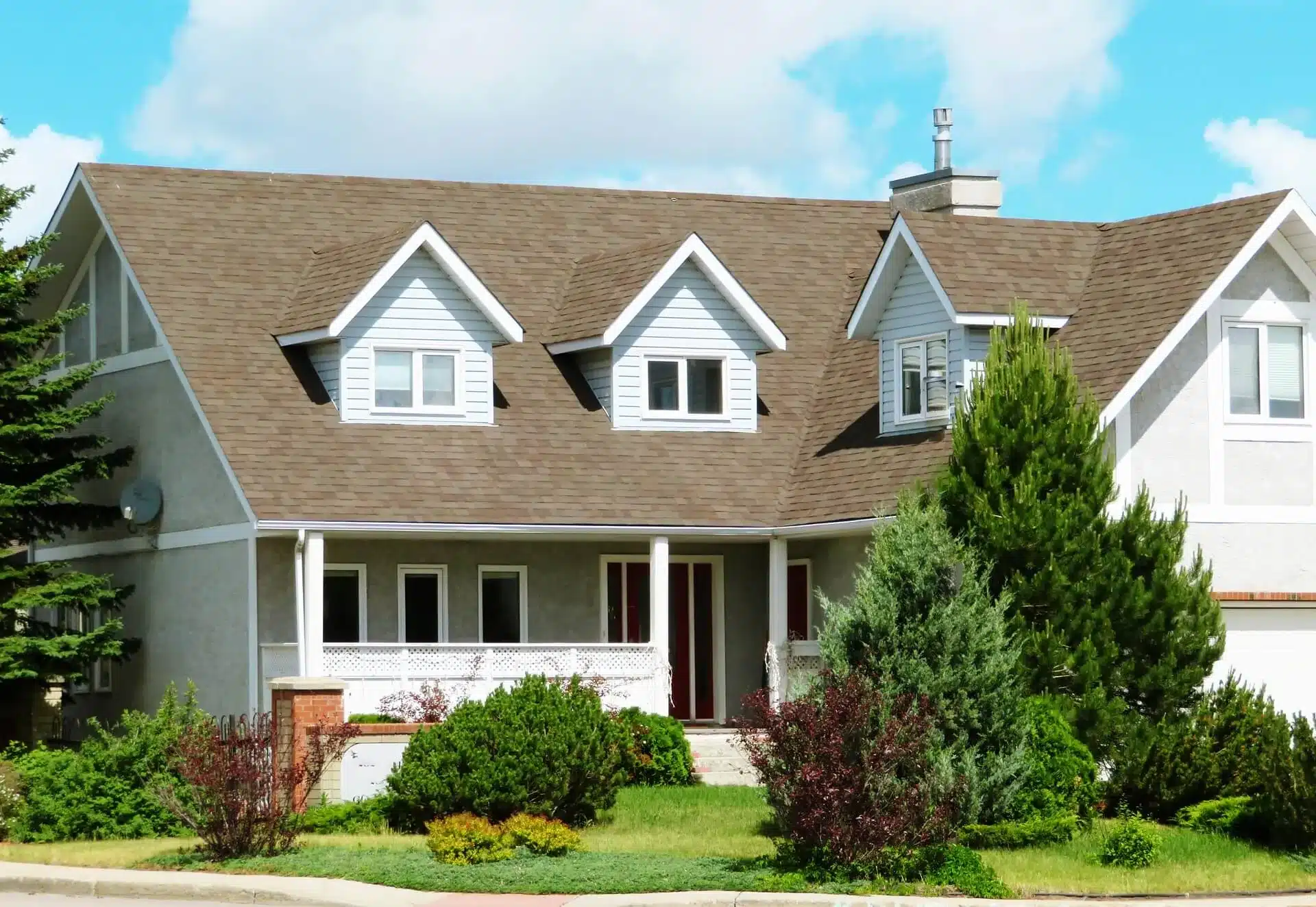
Winter Roof Damage in Columbus Ohio
Ice dams, damaged roof details and attic condensation can all leave winter moisture inside a home.
A ceiling stain after snowmelt needs investigation even when the shingles look intact. The cause may involve water backing up at an eave, an opening around flashing or moisture arriving from indoors. The weather when a stain appears is useful evidence, but it does not identify the cause by itself.
How an ice dam lets water beneath the roofing
An ice dam is a ridge of ice that blocks meltwater near the roof edge. Snow melts over a warmer part of the roof, runs toward a colder overhang and refreezes. Further meltwater can collect behind that ridge and find openings beneath the roof covering.
The roof does not need to lose shingles for this to happen. The important temperature difference can exist across the roof at the same time; an ice dam does not require the outdoor air to thaw and refreeze every day.
University of Minnesota Extension’s ice-dam guidance explains how heat escaping from the home contributes to these uneven roof temperatures. A leak can become apparent during a thaw even though the conditions that allowed it developed earlier.
Address heat loss as well as the water entry point
The Department of Energy’s guidance on cold-climate eaves identifies air sealing, insulation and appropriate roof or attic ventilation as ways to reduce heat reaching the roof deck. If ice dams recur, ask whether the attic and ceiling assembly need assessment alongside the roofing.
Ventilation should match the assembly. Adding vents indiscriminately is not a substitute for finding air leaks, and an intentionally unvented roof needs a different approach. A qualified building-performance professional can help assess heat and moisture movement without assuming that a new roof covering alone will solve it.
Ice protection beneath the roof covering provides another layer of defense against backed-up water. The Residential Code of Ohio roof-assembly provisions include requirements for ice barriers. The applicable details depend on the roof and building; do not assume every roof must use one particular peel-and-stick product.
What to examine around shingles and roof transitions
A winter-related inspection should connect the visible symptom with the surrounding roof details. Ask about these areas, subject to safe access and the agreed inspection scope:
- Shingles: missing pieces, cracks, creases, raised tabs and the condition of fastening and seals.
- Flashing: joints at chimneys, walls and valleys, including visible gaps or displaced components.
- Pipe boots: splits in flexible collars and openings around the pipe or flashing base.
- Eaves and drainage: displaced gutters, fascia staining, damaged soffit panels and signs of overflow or backup.
- Roof vents: damaged covers, disturbed surrounding roofing and blocked openings in a vented assembly.
Weather exposure, age, installation details and previous repairs can all matter. Finding a split collar or loose flashing does not establish when it failed. Matching the exterior condition to interior staining is more useful than attributing every defect to freeze-thaw cycling.
A raised shingle needs assessment before choosing a repair
Cold weather can make asphalt shingles harder to handle, and warmth affects their seal strips. GAF’s cold-weather guidance explains why installation may require hand sealing and why natural sealing depends on warmer conditions.
For an existing raised tab, a roofer should check for cracking, creasing, failed attachment and the manufacturer’s repair instructions. Some conditions call for replacement; others may allow an appropriate repair. Do not assume every unsealed shingle is permanently ruined, or that every lifted tab will safely reseal on its own.
Separate attic condensation from rain or snowmelt leaks
The Department of Energy’s attic air-sealing guide describes how indoor moisture can reach a cold roof cavity through air leaks or improperly terminated exhausts. Condensation can wet roof sheathing and insulation without water entering through the shingles.
Where access permits, the assessment should consider moisture patterns, exhaust routing, air leakage and the roof assembly. Condensation and an exterior leak can also occur together. Our guide to early roof leaks explains why the source should be checked before deciding that the roof covering has failed.
Warning signs you can record without going onto the roof
From a safe location, note where and when you see a new ceiling stain, dripping, repeated ice buildup at the eaves, a sagging gutter or a displaced shingle. Photographs taken during the event can help explain a problem that is no longer visible after the weather changes.
Exterior stains or peeling finishes around the fascia and soffit deserve investigation, but they do not prove concealed rot. Some damage is visible from below; checking hidden wood may require additional access agreed separately.
Keep clear of falling ice and avoid climbing onto a snowy or icy roof. Leave roof snow and ice removal to qualified professionals; attempts to break ice or work beneath an overhang can cause injury and damage roofing.
Schedule around symptoms and safe access
Report an active leak when it happens. A roofer can discuss available assessment or temporary-protection options based on the conditions; do not wait for a preferred spring month while water continues entering.
For a seasonal check, arrange a roof inspection when snow cover and access conditions allow a useful assessment. Ohio State’s Columbus freeze records include spring freezes into May. A fixed calendar date cannot guarantee that freezing weather has ended.
At booking, explain any recurring stains, ice buildup or recent repairs. Ask which roof and attic areas can be inspected and what findings, photographs or written documentation are included. Snow-covered or inaccessible areas should be identified as limitations.
Use the findings to choose the next step
A localized defect may be a candidate for roof repair. Widespread deterioration or other substantial problems may justify discussing roof replacement. Repeated ice dams or condensation can require work on heat and moisture movement as well.
Before authorizing work, ask what was observed, what remains uncertain and how the proposed scope addresses the moisture source. If roofing work is planned, our Columbus and Franklin County permit guide explains how to confirm the applicable permit process.
Discuss your winter roof concerns with Supreme
Supreme Roofing & Exterior provides roof inspections, repairs and replacement in Columbus and surrounding communities. Contact us for a free estimate or email info@supremeexterior.com. Include your address, when the symptom appeared and any photographs you can take safely. See our service area for nearby communities we serve.